
Menu
The book of Revelation can be both exciting and overwhelming, especially when diving into the visions and prophecies in this book. As a middle & high school Bible teacher, we get to help our students see how this book is relevant to our lives today, and the profound messages contained within John’s visions for these churches and ultimately us. I usually begin by teaching the seven churches of Revelation.
Found in chapters 2 and 3, are John’s prophetic messages to seven of the churches along a popular trading route. To understand these messages, it’s essential to provide students with context about each church—Ephesus, Smyrna, Pergamum, Thyatira, Sardis, Philadelphia, and Laodicea. They were real communities in Asia Minor (modern-day Turkey) during the first century AD and each church faced its own unique challenges, both internally and externally, which are addressed in these messages from Jesus to them, through John.

This lecture activity provides students with the historical context of these churches, so they can better grasp the significance of each message. For example, the church in Ephesus was commended for its perseverance but rebuked for losing its first love (Revelation 2:1-7). Teaching students about the cultural and religious context of Ephesus, known for its temple to the goddess Artemis, helps illuminate the challenges faced by the early Christians in maintaining their devotion to Christ amidst societal pressures.
Exploring the specific praises and rebukes directed at each church provides lessons for students about the characteristics of a healthy Christian community. Whether it’s:
– The persecution faced by the church in Smyrna (Revelation 2:8-11),
– The compromise with pagan practices in Pergamum (Revelation 2:12-17), or
– The lukewarmness of the Laodicean church (Revelation 3:14-22), students can reflect on the values to uphold and the pitfalls to avoid in their own Christian walk.
These letters hold truths that resonate with believers today. Despite being addressed to specific churches in a particular historical context, the messages contained within these letters transcend time and culture. They speak to the universal challenges faced by Christian communities throughout history and offer guidance for navigating them with faith and perseverance.
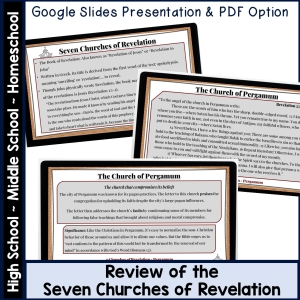
This activity can be done in typical lecture format, using the note-taking handouts, or as individual work as students complete the activity by reading through the lecture slides on their own. After this, I assign the review worksheets to students to complete as a review of the material – sometimes by themselves, other times with a partner.
As we teach about John’s visions for the seven churches, we can prompt students to reflect on the state of their own hearts and/or the health of their local church communities. Are they fervent in their love for God and neighbors, like the church in Ephesus was commended for? Are they willing to endure persecution and hardship for the sake of the gospel, like the church in Smyrna? Are they vigilant against compromise and false teachings, like the church in Pergamum?
Through teaching the letters to the seven churches in Revelation, we can impart historical knowledge while facilitating spiritual growth and maturity in students. Exploring their historical background, their relevance to our lives today, and the timeless truths contained within these letters, students are reminded of how to live faithfully in our world today.
Remember His grace for you as Teaching to Equip our students is hard, but holy work!
– Jamie
Click here to see over 600 resources to help your students learn scripture!

Hi! My name is Jamie. I have a degree in Bible & Theology and Youth Ministry and a Masters in Teaching.
I’ve worked with middle & high school students since 2002, and enjoy my iced coffee with a little white chocolate!