
Menu
While the community and family feeling can be strong in a small school due to its size, being a classroom teacher can also feel very isolating if you are the only teacher of your grade level or subject – I get it, I’ve been there… and still am actually.
While this can be a struggle, this unique environment also provides a great opportunity for teacher collaboration across grade levels. By working together, teachers can enhance their effectiveness, support each other, and create a cohesive learning experience for their students. Here are some practical ways teachers in small schools can collaborate and build a strong, supportive team.

Regular Team Meetings
Establishing regular meetings is essential for fostering communication and collaboration. Teachers from different grade levels can meet weekly or bi-weekly to discuss curriculum alignment, share teaching strategies, and address any challenges they might be facing. These meetings can be a time to brainstorm creative approaches to teaching concepts and ensure that there is a consistent progression in the curriculum from one grade to the next.
Curriculum Mapping and Integration
Curriculum mapping is a powerful tool for ensuring that students receive a comprehensive and cohesive education. Teachers work together to map out the curriculum for each grade level, identifying key themes, stories, and lessons that should be covered or are required by an existing curriculum map. By aligning the curriculum, teachers avoid unnecessary repetition and ensure that students build on their knowledge as they progress through each grade.
Integration with other subjects can also enhance the learning experience. For example, Bible stories can be linked to historical events in social studies, or moral lessons can be reinforced in language arts through relevant literature. Collaborating with teachers of other subjects can create a more holistic educational experience for students.
Shared Resources and Teaching Materials
One of the benefits of collaboration is the sharing of resources and teaching materials. Teachers can create a shared repository of lesson plans, activities, and assessments that can be accessed and utilized by all team members. This not only saves time but also ensures that students are receiving high-quality instruction across all grade levels. Click here to check out 600+ pre-made secondary Bible resources!
Teachers can collaborate on creating new resources, such as multimedia presentations, interactive activities, or thematic units that span multiple grades. By pooling their talents and expertise, teachers can develop richer and more engaging materials for their students.
Mentorship and Peer Support
In a small school, teachers often have the opportunity to mentor and support one another as experienced teachers provide guidance and support to newer or less experienced colleagues. This mentorship can be formalized through a buddy system or more informal through regular check-ins and conversations. Teachers can observe each other’s classes, providing constructive feedback and learning new techniques. This collaborative approach fosters a culture of continuous improvement and professional growth.
Student-Centered Projects and Events
Collaborative projects and events can bring students from different grade levels together, fostering a sense of community and shared purpose. Teachers can organize joint activities, such as service projects, Bible study groups, or chapel services. These events provide opportunities for older students to mentor younger ones and for all students to engage with Biblical teachings in meaningful ways.
By working together, teachers create a more dynamic and engaging learning environment for their students. Collaboration enhances the educational experience, supports professional growth, and builds a strong, supportive teaching community. In small schools, where resources and staff may be limited, the power of teamwork and collaboration becomes even more vital. Together, teachers can achieve great things and inspire their students to grow in both their academic knowledge and relationship with Jesus.
Remember His grace for you as Teaching to Equip our students is hard, but holy work!
– Jamie
Click here to see over 600 resources to help your students learn scripture!
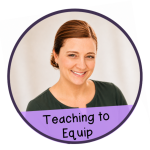
Hi! My name is Jamie. I have a degree in Bible & Theology and Youth Ministry and a Masters in Teaching.
I’ve worked with middle & high school students since 2002, and enjoy my iced coffee with a little white chocolate!