
Menu
Teaching a Bible lesson to youth is more than sharing information. it’s guiding students as they learn how to engage Scripture thoughtfully, ask meaningful questions, and apply biblical truth to their lives.
Our students are in a unique developmental stage. They are forming identity, wrestling with beliefs, and learning how faith connects to real life. Because of this, Bible lessons need to be intentional, structured, and interactive, not just well-meaning.
Rather than relying on disconnected tips, it helps to approach Bible lessons with a repeatable teaching rhythm that supports both understanding and discipleship.
Effective Bible teaching for youth isn’t about covering more material — it’s about helping students learn how to engage Scripture thoughtfully and apply it faithfully.
Effective Bible lessons begin long before students arrive.
Prayer helps center your heart and reminds you that teaching Scripture is spiritual work, not just academic work. Preparation, however, gives direction to the lesson itself.
Before teaching, ask yourself:
– What is the main truth students should understand?
– What do I want this passage to reveal about God?
– How should this shape how students think or live this week?
When preparation starts with purpose, lessons feel focused rather than scattered. Students respond better when they sense that a lesson is going somewhere, not just filling time.
Preparation is key to delivering a Bible lesson that is impactful and meaningful. And students benefit from structure, even when lessons feel conversational.
One helpful way to think about lesson flow is this simple framework:
Prepare → Introduce → Explore → Apply → Reflect
– Prepare: Clarify the goal of the lesson.
– Introduce: Connect the topic to something students already understand or experience.
– Explore: Read and examine the biblical text together.
– Apply: Discuss what the passage means for real life.
– Reflect: Give space for students to internalize and respond.
Using a consistent framework helps students know what to expect and frees you from reinventing your approach each week.
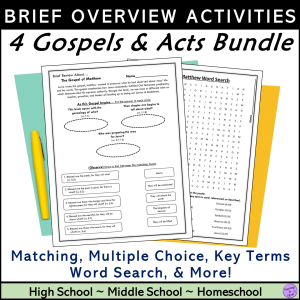
This is why I like these brief review activities for each book of the Bible as each one ends with a reflections, personal application question for my students to apply to their own lives.
Encouraging students to ask questions is vital for their spiritual growth. Questions indicate curiosity and a desire to understand.
Create a safe environment by assuring students that no question is too simple or too difficult. This fosters a classroom culture where they feel comfortable expressing doubts and seeking clarity. But also, be honest if you don’t know the answer. We don’t need to know everything, but offer to help them find the answers to their questions, as this models humility and a commitment to learning.
Challenging students to think should be one of our goals. Instead of focusing only on right answers, ask questions that encourage thinking.
– What stands out to you in this passage?
– Why do you think this mattered to the original audience?
– What does this teach us about God’s character?
– How might this challenge the way we think or act?
Good questions invite participation and show students that wrestling with Scripture is part of faith — not a sign of doubt or failure.
Students respond best to interactive and engaging activities that make the lesson come alive. Choose activities that reinforce the main idea of the lesson, such as:
– Small-group discussion prompts
– Scripture comparison tasks
– Scenario-based application activities
– Guided reflection or journaling
Incorporating a variety of methods can help students connect with the material. Purposeful activities deepen understanding and help students move beyond passive listening.
Activities like these General Survey of the Old Testament Bible Books are a great way to build visuals into your lectures about each book – and each one comes with note-taking and review worksheets too!

– Relate to Their World: Connect biblical truths to real-life situations that teens face, such as friendships, social media, and personal struggles.
– Keep It Simple: Avoid overloading your lesson with too many points. Focus on one or two main takeaways to ensure clarity.
– Invite Participation: Ask open-ended questions and encourage students to share their thoughts. Active participation leads to deeper engagement.
Knowing how to teach a Bible lesson to youth is about more than presenting information—it’s about inspiring transformation.
It doesn’t require perfection — but it does benefit from intentional structure.
A repeatable framework, thoughtful preparation, and meaningful engagement help students move from simply hearing Scripture to understanding and applying it.
Remember His grace for you as Teaching to Equip our students is hard, but holy work!
– Jamie
Click here to see over 700 resources to help your students learn scripture

Hi! My name is Jamie. I have a degree in Bible & Theology and Youth Ministry and a Masters in Teaching.
I’ve worked with middle & high school students since 2002, and enjoy my iced coffee with a little white chocolate!